The Remarkable Story of Dorie Miller and Why Pearl Harbor Feels Different Once you Know His Name.
He was not supposed to be behind that gun. In fact, the Navy had never trained him to use it.
On the morning of December 7, 1941, Doris "Dorie" Miller was a 22-year-old mess attendant aboard the battleship USS West Virginia at Pearl Harbor. He had enlisted in the Navy hoping to travel and earn money for his family, but because he was Black, the segregated Navy severely limited the jobs available to him. The mess branch was one of the few places Black sailors were allowed to serve.
His job was not to fire weapons. His job was to serve officers. Then the bombs began falling. And suddenly that didn't matter anymore.
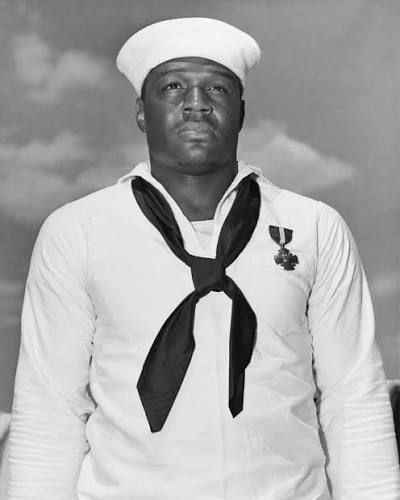
A Sunday Morning that Changed Everything
The morning had begun ordinarily. Miller had gotten up around six o'clock and was collecting laundry when the alarm for general quarters sounded. He immediately headed toward his battle station only to find it no longer existed. It had already been destroyed by torpedo damage.
There was no time for new instructions. The USS West Virginia was being torn apart.
Japanese bombs and torpedoes struck the ship repeatedly. Fire was spreading, water was rushing below the decks, and sailors were wounded everywhere.
Miller was a large, Athetic man, the heavyweight boxing champion aboard the ship, and someone realized his strength was desperately needed. He began carrying wounded sailors to safety.
One after another, across decks slick with water and oil. Through smoke under continuing attack. Then he was ordered to help move the mortally wounded commanding officer, Captain Mervyn Bennion, on the bridge.
Then came the moment that changed Dorie Miller's life.
He saw that something more needed to be done. He walked up to a .50-caliber anti-aircraft machine gun and "I just pulled the trigger." Miller had never been formally trained to operate it. But the Japanese were attacking, and that training didn't matter anymore. It was life or death. So Miller stepped behind the gun and fired.
A year later, he explained: "he had watched others use the weapon, so he knew enough to make it work. He fired until the ammunition was gone and he was ordered to leave the bridge."
Here was a man whom the "system" had decided was qualified to serve meals but not qualified to fight. But when the moment came, Dorie Miller didn't stop and argue about what he had or had not been trained to do. He saw what needed to be done. And he did it.
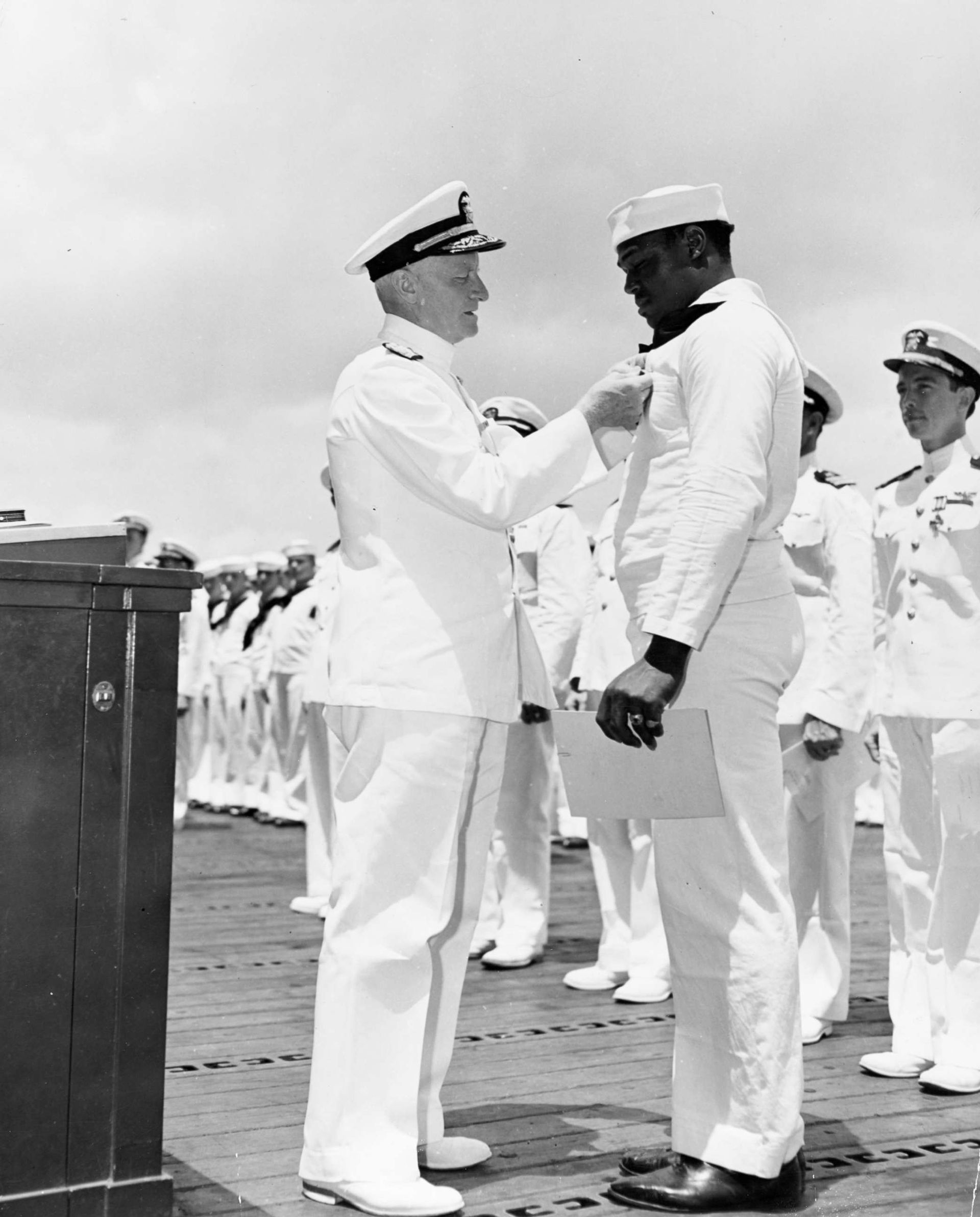
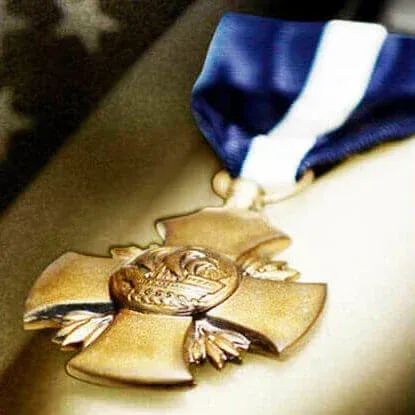
Miller's Navy Cross
Miller Survived Pearl Harbor.
Months later, on May 27, 1942, Admiral Chester Nimitz personally presented him with the Navy Cross for extraordinary courage under attack. Miller was the first black sailor to receive the Navy Cross.
Unfortunately, Miller did not get to come home.
On November 24, 1943, while serving on the USS Liscome Bay, a Japanese submarine torpedo struck the carrier. The ship's aircraft bomb magazine exploded, and it sank within minutes. Dorie Miller was among the lost.
When you visit
If you're planning a trip to Oahu, do not treat Pearl Harbor like a quick morning stop before heading back to Waikiki. Give it time.
- Start at the Pearl Harbor Visitor Center and experience the USS Arizona Memorial. Pearl Harbor National Memorial itself has no entrance fee, although parking currently costs $7 per day, and reservations for the memorial boat program are separate.
- Visit Ford Island, where the Pearl Harbor Aviation Museum occupies historic World War II-era hangars that survived the attack. Some still carry visible evidence of what happened that morning. The museum also offers access to the restored Ford Island Control Tower, 168 feet above the battlefield, giving visitors a perspective of Pearl Harbor that is almost impossible to understand from ground level.
- See the Battleship Missouri, where the formal surrender of Japan was signed in 1945
What Dorie Miller Teaches Us.
The more I thought about Dorie's story, the more one lesson kept coming back to me. Sometimes people decide what we are capable of before we ever get the chance to show them. But God has never been limited by the labels other people place on us. Scripture is filled with people who look unqualified. David was a shepherd. Gideon was afraid. Peter was a fisherman. Yet when their moment came, God used what was already in their hands. I don't know about you, but in my life there have been a lot of times when people looked at me and judged that I was not qualified. But God continues to use me in ways I never thought were possible.
Dorie Miller's situation was very different, and I don't pretend to know his personal faith or what he believed in those moments. But his story still reminds me that:
Our opportunity to make a difference does not always arrive after we feel prepared. Sometimes the moment arrives first, and courage means stepping forward anyway.