From Page to Place: "The Paris Dressmaker"
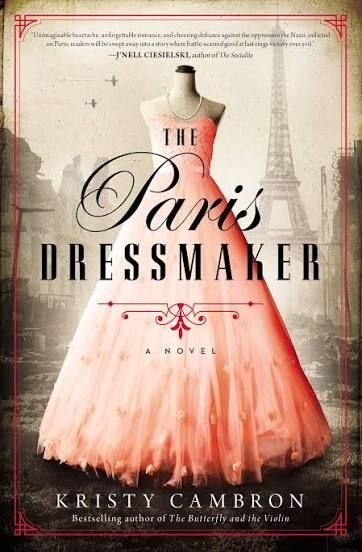
"The Paris Dressmaker:
Secrets Sewn in Silk and the Women Who Defied the Nazis.
Paris, 1943. A woman stands before an elegant evening gown. The silk is exquisite. The stitching is nearly invisible. To anyone passing through the room, it is simply another beautiful garment, one of countless treasures moving through a city under German occupation. But this gown conceals something far more valuable than its fabric—a secret. And in occupied Paris, a secret could cost someone their life.
Outside, German soldiers patrol the boulevards. Food is scarce. Families have disappeared. Neighbors are afraid to speak too freely, and even the smallest act of defiance carries terrible consequences. Yet behind the elegant doors of fashionable hotels, inside dressmaking salons, and among priceless paintings stolen from Jewish families, ordinary women are fighting a war of their own. Their weapons are not rifles or tanks. They are needles, fabric, coded messages, quiet conversations, and the courage to notice what others overlook.
This is the work of Kristy Cambrons's "The Paris Dressmaker." And the real history behind this book is fascinating.
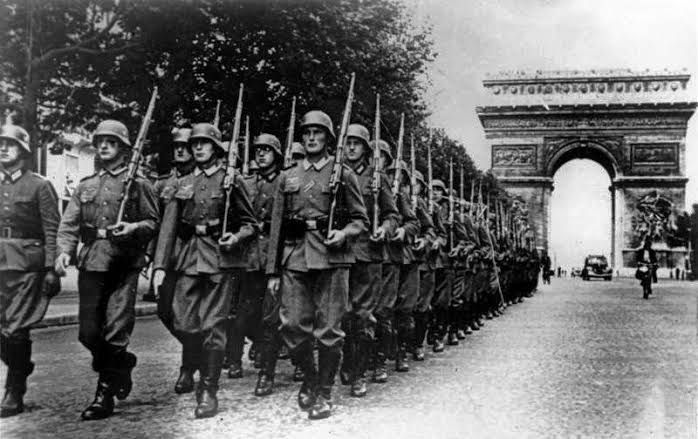
On June 14, 1940, German troops entered Paris. The city, famous for its art, romance, cafes, and fashion, had fallen. For the people who remained, daily life changed almost overnight.
German flags hung from prominent buildings. Soldiers occupied hotels and public spaces. Food rationing became a daily reality. Curfew, censorship, arrests, and increasingly severe restrictions transformed ordinary routines.
For Jewish Parisians, the dangers were especially grave. Discriminatory laws stripped people of rights, livelihoods, and property. Arrests and deportations would follow. Paris still looked like Paris. The Eiffel Tower still rose above the rooftops. The Seine continued flowing beneath its bridges. Beautiful dresses still appeared in fashionable windows. But beneath that familiar surface, the city was living in fear. And some of its citizens were quietly preparing to fight back.
Two women
Lila de Laurent, a talented dressmaker whose career in Parisian haute couture is shattered by the war. As the German occupation tightens its grip on the city, Lila discovers that the very skills that once helped her create beautiful clothing can serve a far more dangerous purpose. She moves among wealthy and influential clients, including people connected to the occupying forces. A fitting becomes an opportunity to listen. An overheard conversation becomes valuable intelligence. A fashionable gown becomes something more than an object of beauty. And the glamour of the Hotel Ritz, where German offices and prominent figures gather, becomes a place where appearances can conceal deadly secrets.
Lila is a fictional character, but the circumstances surrounding her story draw upon a remarkable truth. During the occupation, women participated in the French Resistance in countless ways. Some carried messages. Others hid people fleeing persecution, distributed underground newspapers, forged documents, gathered intelligence, or helped transport supplies.
Many appeared to be going about perfectly ordinary lives. That was often the greatest protection. The enemy might overlook a woman carrying a shopping basket or delivering a parcel. What they could not see was the message hidden inside. And the world of fashion provided another unexpected opportunity for resistance. A dressmaker had access to private homes, conversation, and powerful clients. Her work demanded discretion. She could move through spaces where others might attract suspicion.
Rose Valland. At the Jeu de Paume, a building near the Tuileries Garden, the Nazis were carrying out an enormous campaign of cultural theft. Paintings, sculptures, furniture, and other treasures were seized from Jewish collectors and families. Some were intended for Hitler's planned museum. Others were selected for Nazi leaders or destined for sale and exchange.
The Jeu de Paume became a sorting and processing center for stolen artwork. Crates arrived. Paintings were unpacked. Officials examined and recorded the treasures. Then they were shipped away.
Working inside the building was a French Museum employee named Rose Valland. The Germans underestimated her. They did not realize how much she understood or how carefully she was watching. Valland secretly recorded information about the artworks passing through the building, including their owners, destinations, and shipments. Her work was extraordinarily dangerous. If the occupying authorities had discovered the extent of her activities, the consequences could have been fatal. Yet she continued.
Page after page, she preserved information that might one day help return stolen masterpieces to their rightful owners.
When the war ended, her records became invaluable to the Allied effort to recover looted art. She later worked with those tracing and recovering cultural treasures across Europe. She didn't need a weapon; all she needed was a notebook.
One Gown
Kristy Cambron's novel brings together two fictional women whose lives unfold during different years of the occupation. Lile, the dressmaker, uses her skills and access to gather intelligence. Sandrine Paquet, meanwhile, catalogs stolen artwork while secretly collecting information for the Resistance. Their stories become connected through an exquisite Chanel gown containing a cryptic message.
The Story may be fictional. But many aspects are real. Rose is real, and today we can walk in the footsteps of these women who joined the Resistance to make a difference.
Six Days:
Following the Secret of the Paris Dressmaker
List of Services
-
Day One: Paris: The City That Refused to SurrenderList Item 1
Your adventure begins in one of the most beautiful cities in the world.
As you arrive in Paris, the familiar landmarks rise around you. You see the Eiffel Tower, the bridges of the Seine, and the grand boulevards lined with elegant buildings.
But today, we're looking at Paris through a different lens. Your guide introduces you to the city as it existed in June 1940. Along the historic streets, you'll learn how the German occupation changed everyday life.
You can see yourself standing in a bread line, uncertain whether there will be enough food for your family. Feel the fear as the passing soldier comes so close you can smell them. And whispering all the time because you no longer know who might be able to hear what you say.
Today those same cafes and boulevards are now filled with music and conversation. Your introductory walk takes you along the Seine and through the historic heart of the city, setting the stage for the days ahead.
In the evening, enjoy a traditional French dinner in a charming Parisian restaurant. As the lights begin to sparkle along the river, there's something powerful about seeing the city alive and beautiful again.
-
Day Two: Secrets Behind the Doors of the RitzList Item 2
Today, you will step into the glamorous and sometimes dangerous world of wartime Parisian fashion.
Begin near the elegant Place Vendôme, surrounded by grand facades and luxury boutiques. Here stands the Hotel Ritz Paris.
During the German occupation, the hotel was used by high-ranking German officers and remained associated with some of wartime Paris's most powerful figures. It also serves as a major setting in "The Paris Dressmaker."
In the novel, Lila moves among wealthy clients and members of the occupying elite, using her talent for dressmaking to gather intelligence.
Today, the Ritz is once again one of Paris's most celebrated luxury hotels. Depending on availability, you will have a special experience here. Perhaps afternoon tea or an elegant meal.
Sitting inside this historic hotel, surrounded by polished interiors and impeccable service, it's extraordinary to consider how different the atmosphere was during the occupation.
Afterward, you will explore the history of Parisian haute couture. With a specialist guide, discover how the city's fashion houses survived the war and how clothing, rationing, scarcity, and politics shaped the industry. You will be guided through a fashion museum, revealing the extraordinary craftsmanship behind the garments that made Paris famous.
And for something truly memorable, we can arrange a hands-on fashion or embroidery workshop where you'll discover the techniques behind exquisite French needlework.
-
Day Three: Stolen Masterpieces and the Courage of Rose VallandList Item 3
Today may be the most fascinating day of the entire journey.
You are visiting the actual building where one of the most extraordinary stories of wartime art espionage unfolded.
Your destination is the Jeu de Paume, beside the Tuileries Garden. Today, it is a cultural institution known for photography and contemporary visual art. But during the German occupation, it served a far darker purpose. Inside this building, Nazi officials processed artworks stolen from Jewish Collections. Crates arrived from confiscated homes and galleries. Paintings were examined, inventoried, and prepared for transport.
Rose Valland watched. She carefully gathered information about the stolen treasures, secretly preserving details that would later help investigators trace them. Standing outside the actual building, you'll hear the story in the very place where she took those risks.
From here, you will continue through the Tuileries to the Louver. The Louver's own wartime story is remarkable. Before German forces arrived, museum staff had already undertaken an enormous effort to move and protect major artworks. Thousands of objects were packed and transported to safer locations. The famous "Mona Lisa" was among the masterpieces evacuated from Paris.
-
Day Four: The Hidden Resistance and the Streets of Le MaraisList Item 4
Today, you will explore a different side of wartime Paris.
Our destination is Le Marais, a neighborhood of narrow streets, historic buildings, and a long Jewish history. Before the war, this district was home to a vibrant community of families, shopkeepers, artisans, and businesses.
During the occupation, Jewish residents faced escalating persecution, arrests, and deportation. Your guide will help you discover the neighborhood's history through its streets, memorials, and surviving landmarks. Look carefully at the buildings. You may notice small plaques commemorating residents who were deported or members of the Resistance who died during the war. These quiet markers reveal stories that are easy to miss.
You'll also visit the Memorial de la Shoah, one of France's most important institutions dedicated to the history and remembrance of the Holocaust. Here, the enormous human cost of Nazi persecution becomes impossible to overlook. The experience is deeply moving, but it is essential to understanding the world in which the novel takes place.
Later, your guide introduces you to the extraordinary networks of ordinary people who resisted. Women carried messages. Families hid those being hunted. Printers produced underground newspapers. Couriers transported documents and information through a city filled with checkpoints and surveillance.
Some people helped strangers they had never met, knowing that discovery could mean imprisonment or death. And many of their names are still unfamiliar to us.
In the afternoon, enjoy time in today's Le Marais, where cafes, galleries, and independent shops fill streets that have witnessed centuries of history.
-
Day Five: Beneath Paris
Today, you're going underground. Your destination is the Musée de la Libération de Paris, dedicated to the French Resistance, General Leclerc, Jean Moulin, and the liberation of the city.
The museum tells the story of those who fought against the occupation, from clandestine resistance networks to the soldiers who helped free France. But beneath the museum lies something extraordinary—the Wartime command post.
Approximately twenty meters underground, Colonel Henri Rol-Tanguy and members of the French Forces of the Interior directed operations during the August 1944 uprising in Paris.
In the final days of the occupation, messages were received, decisions were made, and orders were issued as resistance fighters confronted German forces.
Descend the stairs into the underground headquarters. The atmosphere is unlike anything else on our itinerary. You're not simply reading about liberation. You're standing in one of the places where it was organized.
After exploring the museum, you'll continue tracing the events of August 1944. Paris was finally liberated on August 25. Church bells rang. Crowds poured into the streets. French flags appeared in windows across buildings. After four years of occupation, the city was free. For many families, liberation brought overwhelming joy. For others, it also brought the painful realization that loved ones would never return.
-
Day Six: Lost Treasure and the Paris that Survived
Your final day brings the different threads of the story together.
Begin with a guided exploration of the places associated with Paris's liberation.
At the Hotel de Ville, the city's historic town hall, you'll learn about the dramatic events of August 1944 and the celebrations that followed.
Then continue along the streets where crowds gathered as Allied and Free French forces entered the city.
If time allows, visit Les Invalides and the Musée de l'Ordre de la Libération, which honors people and organizations involved in the struggle to free France.
In the afternoon, you have one last task to complete before you head home. Find a bookstore. Select your next historical novel. Then let me know where you next From Page to Place Itinerary is taking you.
At Dream Shaper Journeys, I specialize in creating meaningful travel experiences that go beyond ordinary sightseeing.
Whether you've fallen in love with a historical novel, want to follow the footsteps of remarkable people, or simply enjoy discovering the fascinating stories behind the places you visit, I'd love to help you plan your own adventure.
Your Paris journey can be customized with carefully selected hotels, private historical guides, museum experiences, special dining, and unique activities that bring the story to life. And remember, I do not charge a planning fee.