America built a capital from scratch. More than 200 years later, some of its best stories are still hiding beyond the monuments.
There is something I want you to try the next time you picture Washington, D.C. Forget everything. Forget the Washington Monument, the Lincoln Memorial, the White House, the Capitol dome, and the long reflecting pool. Now picture nothing. No monuments, Smithsonian museums, grand government buildings, marble memorials. Instead, picture a swamp. A literal marshy, muddy, stinky swamp with woods and farms and only 2 existing communities. Georgetown and Alexandra sitting along the Potomac River. Because in 1790, the Washington, D.C. we know today didn't exist.
In 1790, America had....
- Won a revolution.
- Written a Constitution.
- George Washington had become the first president.
It Didn't have a permanent home!
George Washington was given the authority to choose the location. He knew the landscape. His home at Mount Vernon was just down the Potomac, and he believed the river could become an important commercial route into the country's interior. The site was selected.
But now someone had to answer a much bigger question:
What should the Capital of the United States look like?
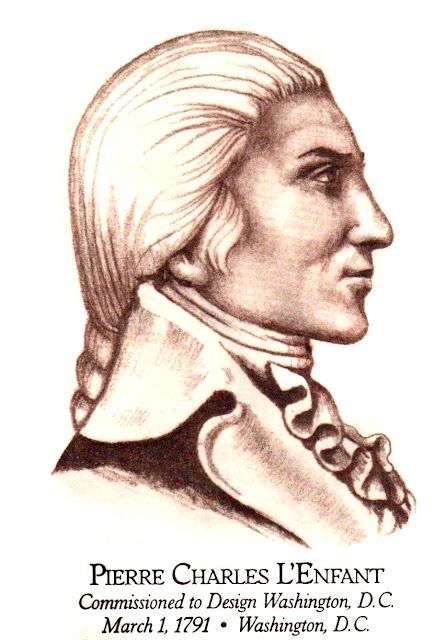
Enter Pierre Charles L'Enfant,
Pierre Charles L'Enfant
L'Enfant was a French-born engineer who had fought for the Americans during the Revolution. And he didn't imagine a modest little government town. He imagined something enormous.
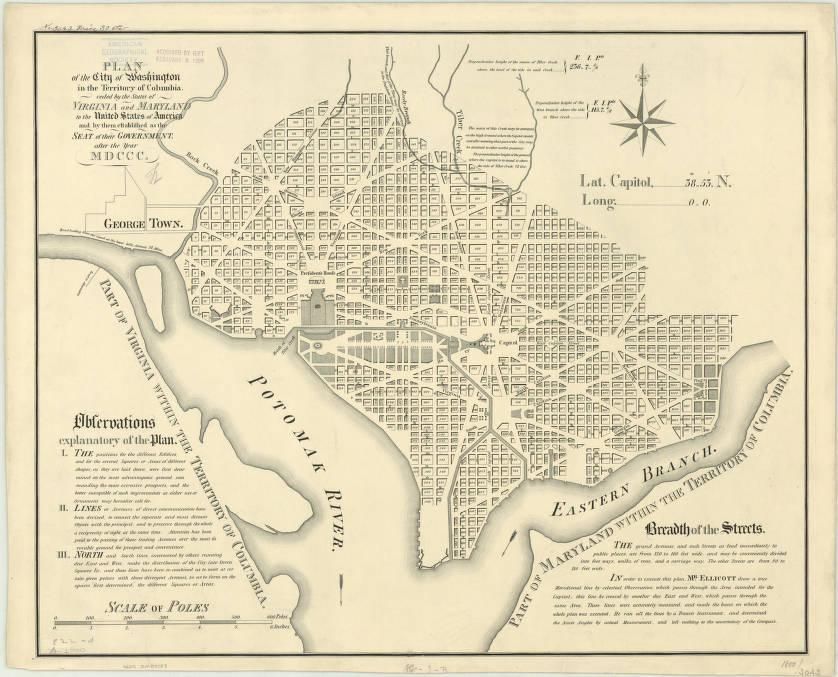
Grand avenues, Great public spaces, Important buildings set on hills, Broad diagonal streets cutting across a grid. Long sight lines designed to make the city feel monumental. This wasn't merely city planning. It was symbolism.
America was still a fragile experiment in self-government, but L'Enfant was designing its capital as though he expected the country to survive.
They were building a future they couldn't possibly see yet.
Then L'Enfant Got FIred.
Of course, things didn't go as planned.
L'Enfant had a vision; he also had very strong opinions about it. He clashed with the commissioners overseeing the construction. He resisted requests for copies of his plan. And when a wealthy landowner built a house where L'Enfant intended one of his grand avenues to run....
L'Enfant had the house demolished.
As you can only imagine, that did not improve relations. By 1792, George Washington fired him.
Surveyor Andrew Ellicott continued the work, producing a revised version of L'Enfant's Plan
1800: The Government Arrived!
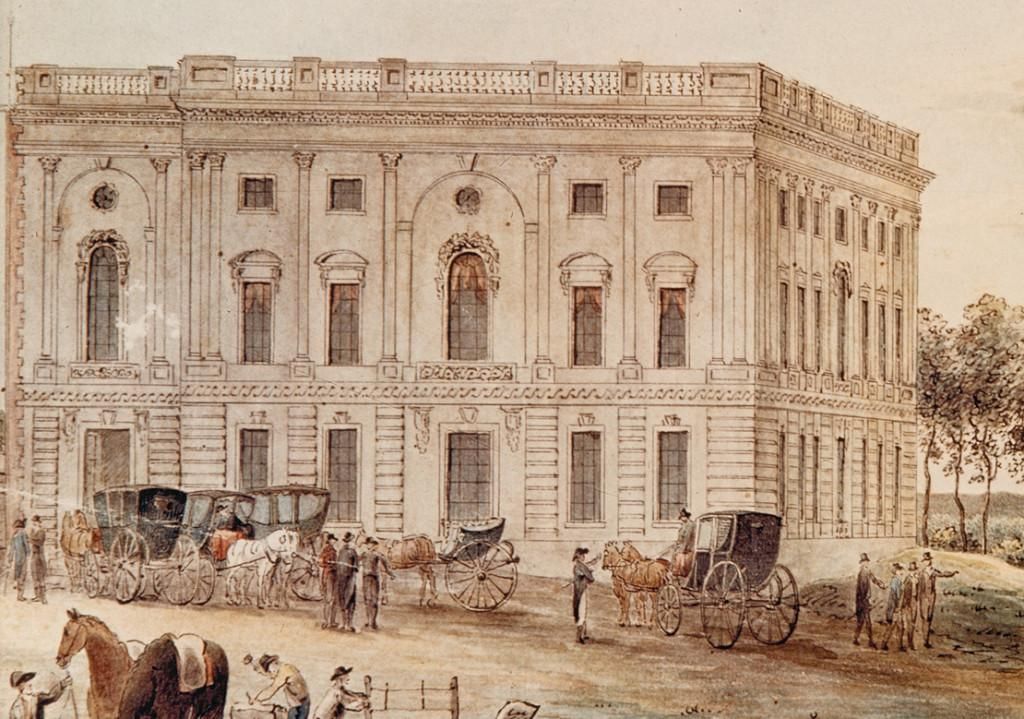
In 1800, the federal government finally moved to Washington. Suppose you're picturing the magnificent capital we know today; don't. The Capitol wasn't finished. The President's House wasn't finished. Roads were muddy. Construction was everywhere. Members of Congress complained about accommodations and the primitive condition of their new capital.
Abigail Adams famously hung laundry to dry in the unfinished East Room of the White House. America had built itself a capital. Sort of..... And then, only fourteen years later
The British Set Fire To It.
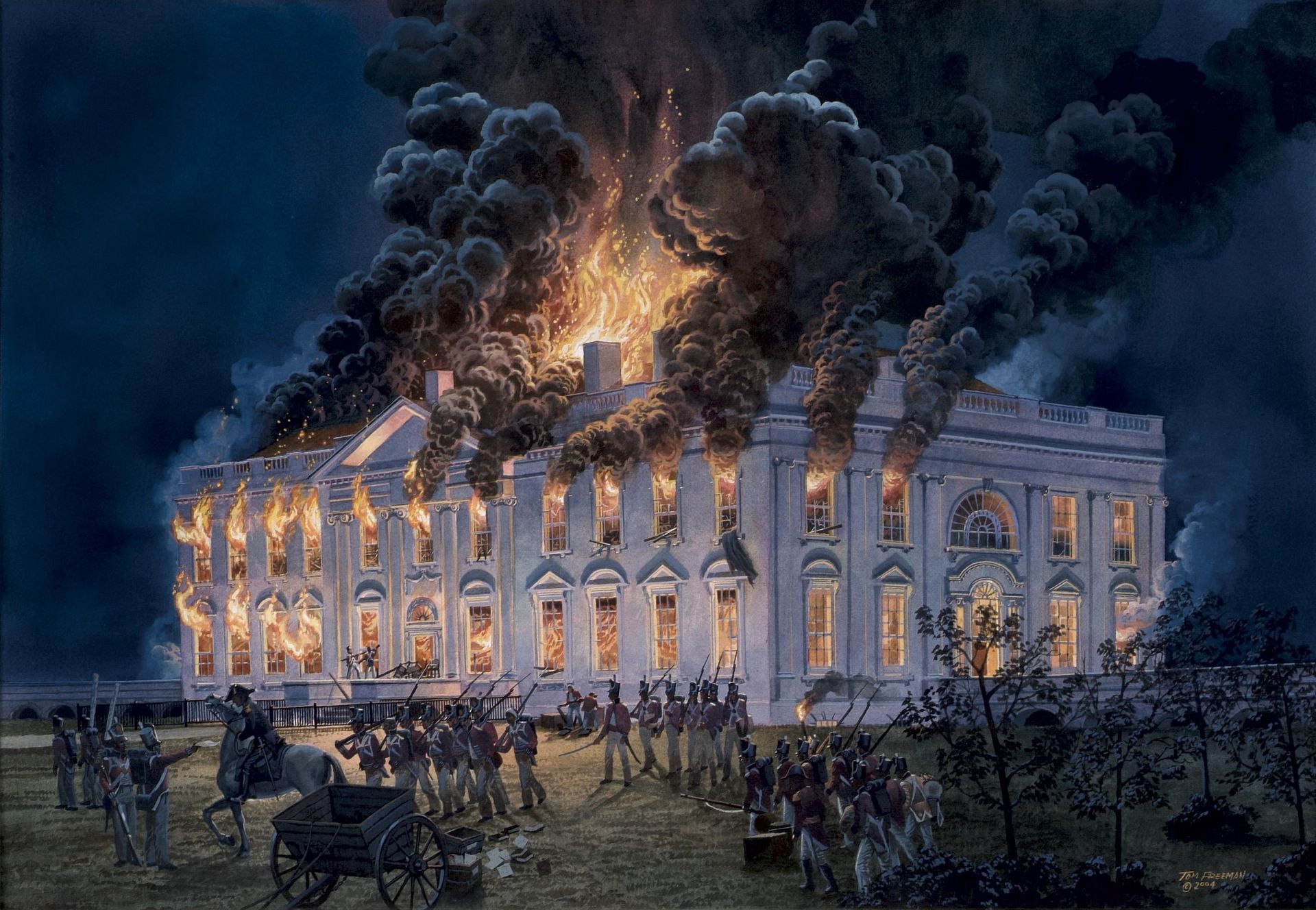
In August 1814, during the War of 1812, British troops entered Washington.
The Capitol Burned.... The President's House burned... Other public buildings were destroyed.
Imagine what that must have looked like.
This city that had barely begun was on fire.
America could have moved its capital somewhere else; instead, it rebuilt. And Washington kept growing.
But Washington wasn't Finished...
List of Services
- Washington Monument wasn't completed until 1884
List Item 1
Washington Monument wasn't completed until 1884
- Lincoln Memorial wasn't built until 1922.
List Item 2
The Lincoln Memorial wasn't dedicated until 1922.
- National Mall
List Item 3
Much of the National Mall, as we know it today, was developed long after George Washington died.
The Washington You Haven't Seen!
When we visit Washington, D.C., we all visit the same places. And don't get me wrong, you need to see those places, but there is more to Washington than those places. Another Washington is hiding behind the one everybody visits. And some of it is hiding in plain sight.
- There are places in Washington where you can get much closer to history than most tourists ever realize.
- There are special tours that take you into spaces ordinary visitors don't see.
- There are places connected to Abraham Lincoln that I would argue tell you more about the man than his memorial does.
- There's a place where you can stand where a sitting president found himself within range of enemy fire during the Civil War.
- There are pieces of the original Washington still sitting exactly where surveyors placed them while George Washington was president.
- And there's even a Washington experience that involves 333 stairs, hidden passageways, and a view most tourists will never see.
I'm deliberately not telling you where any of them are..... Yet. :)
You have to watch my video later this week to get all those details. We're going to uncover the places you probably didn't know you could visit, special tours most tourists don't know exist, forgotten places of Washington's earlier history, and a few experiences that require a little planning but could become the part of your Washington trip you talk about for years.
I'm not only going to show you those places; I'm going to tell you, actually, how to experience them.
The Perfect Place to end!
For the past 8 weeks, we have traveled across America. We have stood where history happened. We have reflected on what we can learn by experiencing history firsthand rather than just reading about it in books.
History can be hard. Especially if you really dig into it. Sometimes it has issues and things that happened that we are not proud of. Then sometimes it makes us all want to stand up and cheer. History teaches us how to handle such instances so we don't repeat the same mistakes that have plagued us for hundreds of years.
Most importantly, though, we have seen that some of the most important things God does happen quietly, through ordinary people. In places nobody is watching. The people who began laying out Washington couldn't see the city we know today.
As they watched the White House burn, they didn't see or know what it would one day look like. Today, I watched a chapter of my life close, and it's hard. It brings tears. But while I see only part of the story, God sees it all. George Washington helped create the largest country. The country that would still stand for freedom 250 years later. But God knew it would be here, and God knew that George Washington was the right person to be our founding father.
So, yes, see the monuments, the White House, Smithsonian, and Ford's Theatre, but also take the time to see the hidden lessons that God has for you in the quiet moments as you experience America's 250th anniversary in Washington, D.C.
What's Next! We're going to Canada!