Valley Forge: The Winter that Nearly Ended the American Dream!
There are places in America where history was made in a single day. Lexington Green was one. Independence Hall was another. Then there are places like Valley Forge National Historical Park in Pennsylvania, where history wasn't made in a moment. It was made over six long months.
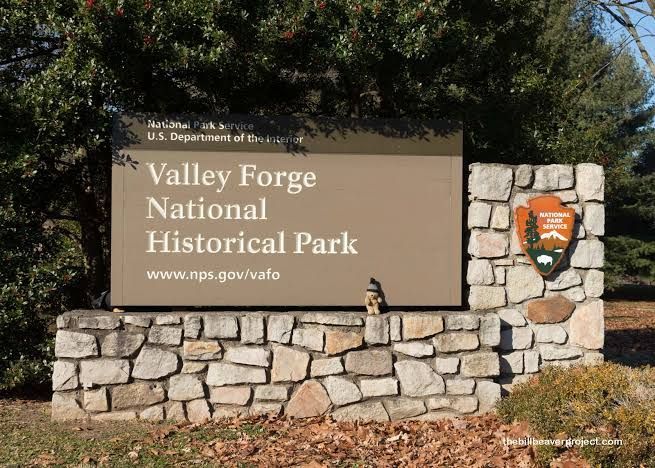
When most people hear the words Valley Forge, they think of snow, cold, hungry soldiers, and George Washington. And while all of that is true, I don't think that's the story that has stayed with me.
The story that stays with me is much bigger.
Why didn't they go home?
If I'm being honest, I probably would have. I would have thought I'd come back when it's warmer and there is actually a reason to stay.
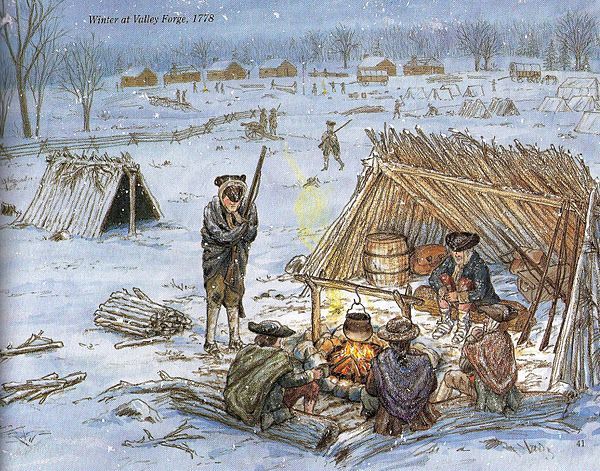
Imagine leaving your family just before Christmas in December of 1777. You tell them you'll be gone for a while, never imagining what the winter ahead would bring.
When you arrive at Valley Forge, there are no rows of sturdy cabins waiting for you.
No warm beds. No kitchens. No Comforts.
The soldiers had to build their own log huts while winter settled in around them. Many didn't even have proper coats. Some had no shoes.
In fact, accounts describe bloody footprints left in the snow by men whose worn-out shoes could no longer protect their feet.
Can you imagine? I complain when my feet get cold walking from the parking lot into a store. These men marched for miles through ice and snow.
These men weren't superheros. They were ordinary people. Farmers, Blacksmiths, carpenters, teachers, and neighbors. Many were no older than our own sons and daughters. They laughed. They worried and they missed home. And I imagine every one of them wondered at some point... "Is it worth it?"
The winter at Valley Forge wasn't the deadliest battle of the American Revolution. The greatest enemy wasn't even the British Army.
Typhus
Influenza
Pneumonia
Smallpox
It was a disease. Poor sanitation and overcrowding spread illness throughout the camp. By the time spring arrived, approximately 2,000 soldiers had died. Not in battle. Simply trying to survive. As I've read the stories, I kept asking myself the same questions: why did the others stay?
Some certainly left. Desertion happened. But thousands didn't. They stayed because they believed something greater was waiting beyond that winter. That thought stopped me because perseverance is never really about the circumstances you're facing.
George Washington understood this. Long before Valley Forge, during the Battle of the Monongahela in 1755, while serving in the French and Indian War, he rode fearlessly across the battlefield delivering orders as bullets flew all around him. Two horses were shot from under him, and when the fighting was over, his coat was found with numerous bullet holes, but Washington himself had not been wounded.
Years later, an elderly Native American leader sought out Washington and shared a remarkable story. He said that during that battle he had ordered his warriors to aim directly at the young officer. Again and again they fired, yet every shot seemed to miss. The chief told Washington that his warriors never miss and there is only one explanation. "The Great Spirit was protecting him for a purpose."
By the time he arrived at Valley Forge, I believe he knew he was there for a purpose. The road ahead would be imaginably difficult, but he never abandoned the cause he believed he had been called to lead: the call from God to lead this nation.
The soldiers saw that faith. They saw him praying in the snow. They saw that he was willing to sacrifice everything to fulfill the calling placed on his life, and they were willing to stand with him when the winter grew colder, when food became scarce, and when disease swept through the camp. They didn't stay because they believed the winter would be easy. They stayed because they believed in their commander. They believed in the cause.
And somehow, despite every hardship they faced, George Washington never let them lose hope that spring would come and, with it, the possibility of a free nation.
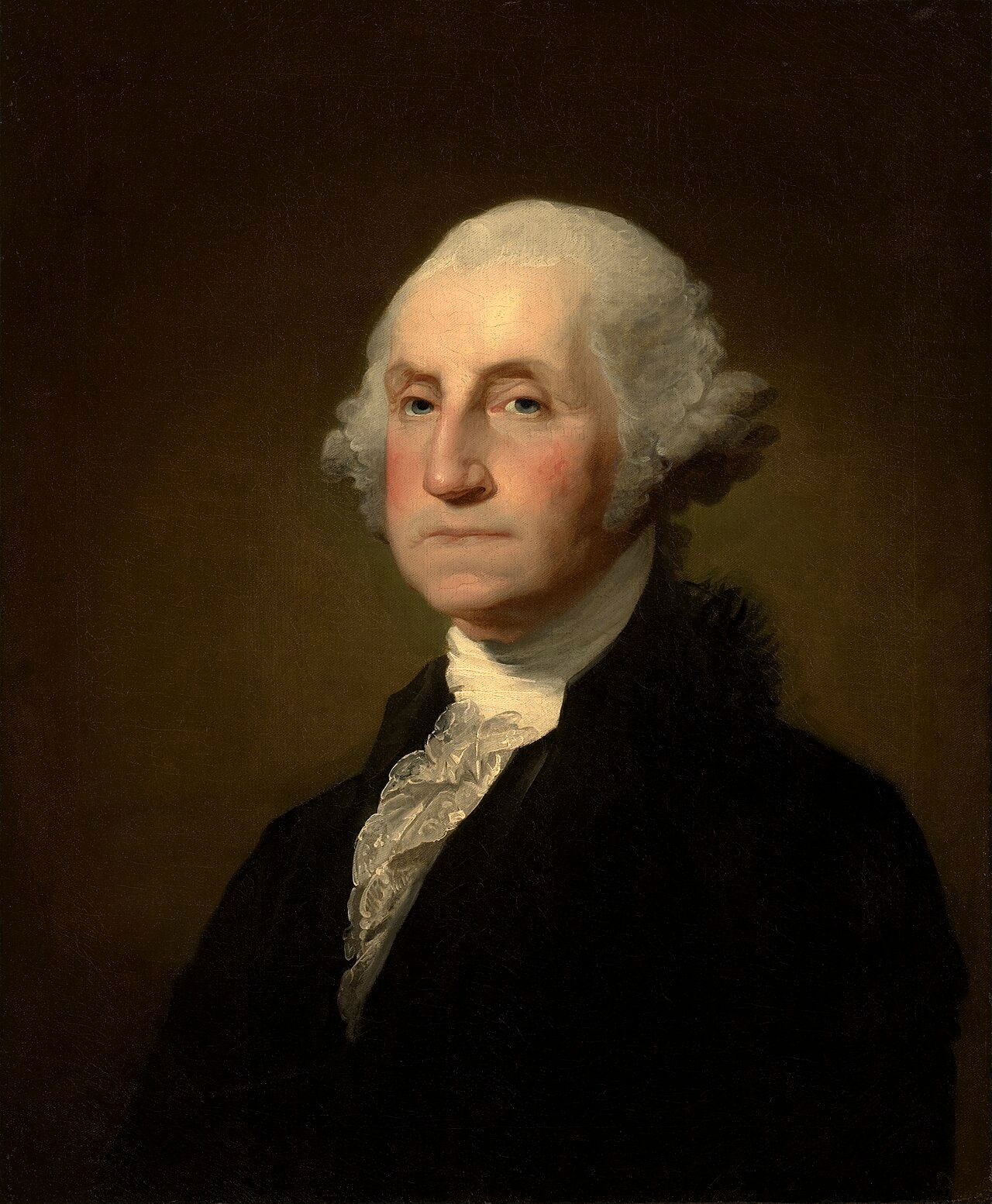
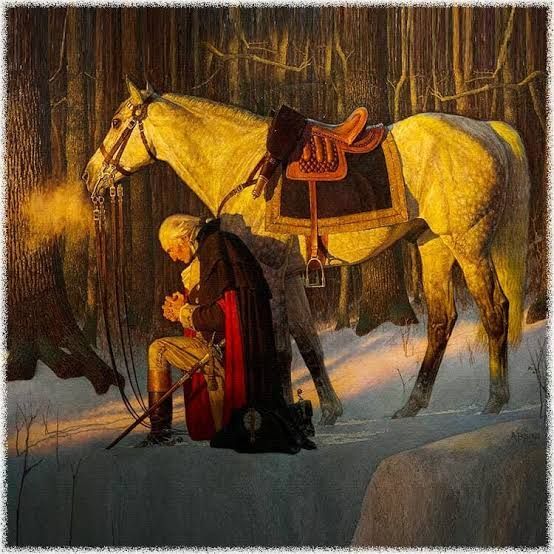
Because of this faith, the men stayed. Because of George Washington's devotion to God and His protection during the formation of this country, the men continued to train in the snow.
During this time, the men became stronger, and Valley Forge became about more than building an army or surviving a harsh winter. It became about faith. It became about following a calling God has placed on your life. It became about trusting God when everything looks very bad.
It's about devotion to God and country.
This has always been one of my favorite stories about the American Revolution.
Sometimes the places where we struggle the most become the places where we grow the most.
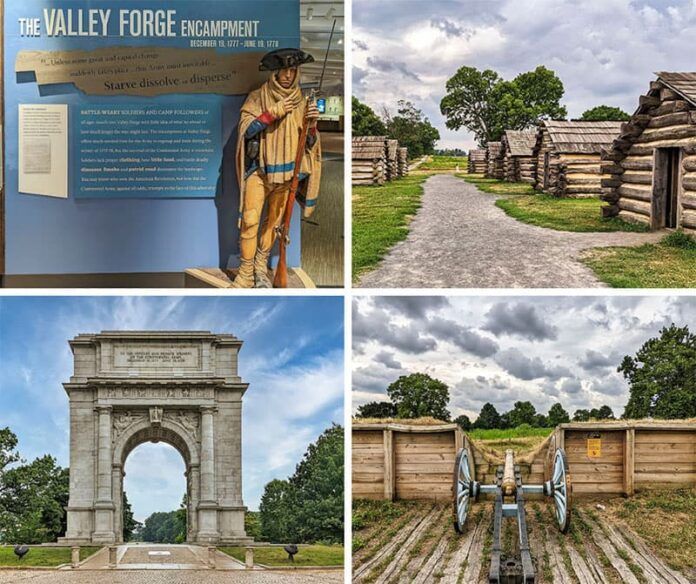
Today, when you visit Valley Forge National Historical Park, it's peaceful. It's warm. There is plenty of food. You can walk the trails that wind through the open fields. There are reconstructed huts that stand quietly beneath towering trees. Washington's Headquarters still welcomes visitors. Birds sing. Children ride bicycles. Families picnic where soldiers once struggled simply to survive another day. It's beautiful. It's hard to imagine the suffering that once filled those same hills.
And yet, if you stop for a moment. Suppose you walk inside one of those log huts, and stand silently where those soldiers once stood. You begin to understand something that no history book can fully explain. Valley Forge was never really about the cold. It was about faith. Faith in a God who protects and trust. Trust in the leader that God put in place and following that leadership even when it doesn't make sense.
Two hundred fifty years later, I think that's why this place still matters, and that is why they chose to stay.
One of the greatest gifts travel gives us is perspective. You can read about Valley Forge in a history book. You can memorize the dates, the names, and the facts.
But when you stand inside a soldier's hut, look across the fields, and imagine spending an entire winter there with little food, worn-out shoes, and no certainty that spring would bring victory, history becomes something much more personal.
That's why places like Valley Forge deserve more than a quick stop on a sightseeing tour. They deserve our time, our imagination, and our gratitude.
As America celebrates its 250th anniversary, I hope you'll consider visiting the places where our nation's story was shaped not just by famous leaders, but by ordinary people whose faith, trust, and perseverance changed the course of history.
History isn't found in the pages of a book. It's waiting in the places where ordinary people changed the world.
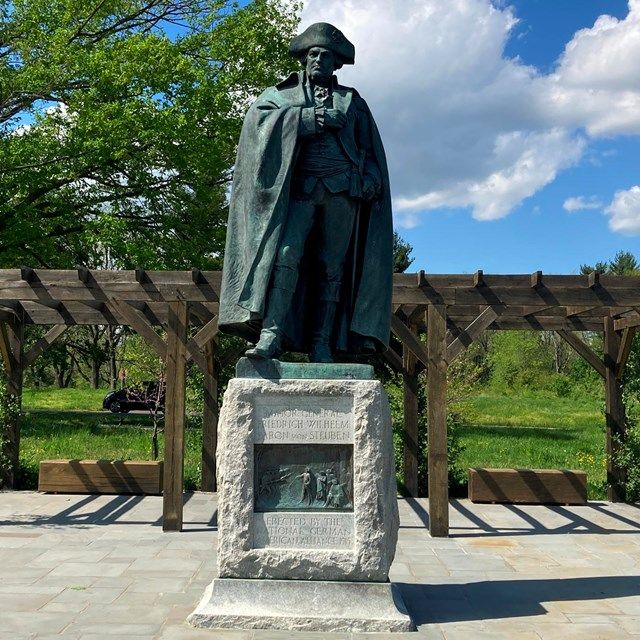
If you had stood at Valley Forge in the winter of 1777, with no guarantee of victory and every reason to leave... would you have stayed?